
Technology is moving faster than ever, and 2026 is proving to be a major year for artificial intelligence, advanced computing, robotics, cybersecurity, and connected devices. New tools are no longer limited to research laboratories or large technology companies. They are increasingly becoming part of workplaces, homes, schools, factories, transportation systems, and everyday digital services.
For readers following newsreverse com, understanding the bigger picture is just as important as knowing individual product launches. The most important technology developments are increasingly connected. AI is influencing robotics, cloud computing is supporting intelligent applications, cybersecurity is adapting to AI-powered attacks, and quantum computing is moving closer to practical business experimentation.
The technology landscape can therefore be viewed as a combination of fast-moving innovations rather than isolated gadgets. Some developments are already useful, while others remain in the experimental stage. Knowing the difference can help consumers and businesses make smarter decisions.
Artificial Intelligence Is Moving Beyond Simple Chatbots
Artificial intelligence remains one of the strongest forces influencing the technology industry. The focus is gradually shifting from systems that simply answer questions toward AI that can plan tasks, work with multiple applications, analyze information, and assist with complex workflows.
One of the most important developments is agentic AI, where software can perform a sequence of actions instead of waiting for a user to provide instructions at every step. This could affect customer service, software development, research, marketing, finance, and business operations.
For everyday users, the biggest change may be the growing integration of AI into existing products. Instead of opening a separate AI application, people may increasingly encounter intelligent features directly inside smartphones, browsers, productivity software, cameras, vehicles, and wearable devices.
newsreverse com readers should also pay attention to the growing discussion around AI governance. As AI becomes more capable, businesses need stronger rules for privacy, accuracy, security, and human oversight.
Why AI Agents Matter
AI agents could help automate repetitive workflows such as organizing documents, summarizing information, managing schedules, preparing reports, and coordinating software tasks. However, human supervision remains important, especially when an automated decision could affect finances, security, employment, or sensitive information.
Robotics Is Becoming More Practical
Robotics is another technology area gaining momentum. Modern robots are increasingly combining cameras, sensors, machine learning, and advanced software to understand their surroundings and respond to changing conditions.
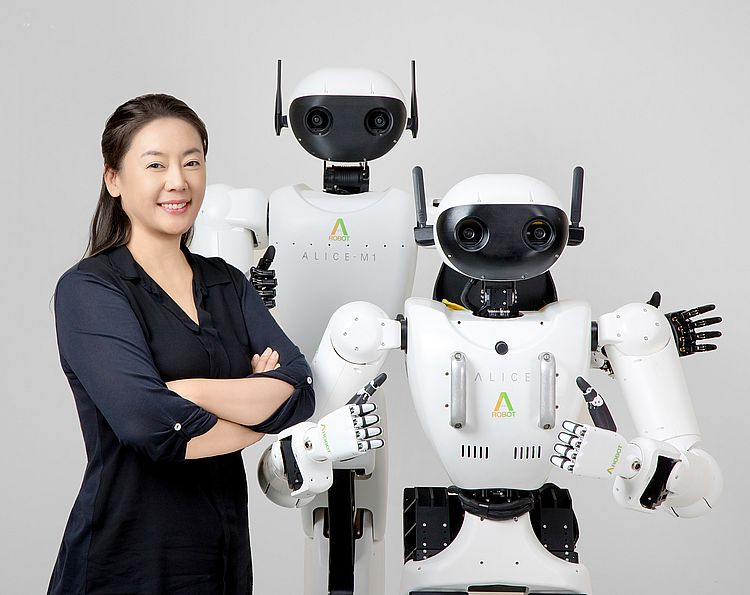
The industry is moving beyond traditional machines designed for one repetitive factory task. Newer systems are being developed for logistics, manufacturing, inspection, healthcare, agriculture, delivery, and other specialized environments.
A particularly interesting direction is physical AI, where intelligent software controls machines operating in the real world. This combination could eventually make robots more adaptable and capable of handling unfamiliar situations.
Recent developments in tactile sensing are also important. Robots traditionally relied heavily on vision, but advanced electronic skin technologies are being developed to help machines detect pressure, force, and movement during physical interactions.
Quantum Computing Is Moving Into Business Conversations
Quantum computing remains an emerging field, but it is receiving increasing attention from businesses and technology leaders. Unlike conventional computers, quantum machines use quantum mechanical principles to approach certain computational problems differently.
The technology is not expected to replace ordinary computers. Instead, its potential lies in specialized problems involving optimization, chemistry, materials science, cryptography, and complex simulations.
Businesses are beginning to explore quantum computing because preparing early could provide an advantage if practical applications mature. At the same time, organizations need realistic expectations because large-scale, commercially useful quantum computing remains technically challenging.
| Technology Trend | Current Direction | Potential Impact |
|---|---|---|
| Artificial Intelligence | Moving toward autonomous agents | Faster automation and decision support |
| Robotics | Combining AI with physical machines | Smarter manufacturing and services |
| Quantum Computing | Early commercial experimentation | Advanced optimization and simulation |
| Cybersecurity | Becoming increasingly AI-driven | Faster threat detection and response |
| Edge Computing | Processing more data locally | Lower latency and better privacy |
| Smart Devices | Deeper AI integration | More personalized digital experiences |
Cybersecurity Is Entering an AI-versus-AI Era
As businesses adopt artificial intelligence, cybercriminals are also gaining access to increasingly sophisticated tools. This creates a technological race in which attackers can automate reconnaissance, generate convincing messages, and adapt their methods while defenders use AI for monitoring and threat detection.
This makes cybersecurity more important for organizations of every size. Security can no longer depend only on traditional passwords and perimeter defenses.
Companies are increasingly focusing on identity protection, continuous monitoring, zero-trust principles, automated detection, and stronger data controls. Individuals also need to pay attention to account security because AI can make scams and impersonation attempts more convincing.
Some important security practices include:
- Using strong and unique passwords
- Enabling multi-factor authentication
- Updating operating systems and applications
- Reviewing unusual account activity
- Avoiding suspicious attachments and messages
- Limiting unnecessary access to personal data
newsreverse com coverage of technology trends should therefore consider security as a central part of innovation rather than a separate issue.
Edge Computing Is Becoming More Important
Cloud computing has transformed how applications store and process information, but not every task should depend entirely on a distant data center. Edge computing brings more processing power closer to where information is generated.
This is particularly useful for autonomous machines, smart cameras, industrial equipment, connected vehicles, and other applications requiring rapid responses.
For example, a factory robot may need to react to an object immediately. Sending every sensor reading to a remote server could introduce delays. Local processing allows the machine to make certain decisions faster.
Edge computing can also reduce bandwidth requirements and may improve privacy by allowing some information to be analyzed locally instead of continuously transmitted elsewhere.
Smartphones Are Becoming More Intelligent
The smartphone market is increasingly focused on AI-powered experiences rather than simply increasing hardware specifications. Modern devices are gaining smarter photography tools, translation features, personalized assistance, on-device processing, and improved voice interaction.
Recent smartphone launches demonstrate how manufacturers are integrating AI into both hardware and software. New processors are increasingly designed with dedicated capabilities for machine-learning workloads, allowing some tasks to run directly on the device.

This trend matters because local AI can provide faster responses and potentially reduce the amount of personal information that must be transferred to cloud servers.
The future smartphone may therefore function less like a traditional communication device and more like a personal digital assistant capable of understanding context and anticipating useful actions.
The Rise of AI-Native Software Development
Software development is also undergoing a major transformation. Developers can now use AI tools to generate code, explain unfamiliar programming concepts, identify potential bugs, create tests, and accelerate documentation.
This does not necessarily mean that programmers will disappear. Instead, the role of developers may shift toward system design, verification, security, architecture, and problem-solving while AI handles more repetitive coding work.
Companies are also exploring AI-native development environments designed around intelligent assistance from the beginning rather than adding AI as an afterthought.
The important question is increasingly not whether developers use AI, but how effectively they can combine automated tools with human judgment.
Digital Provenance and Trust Will Matter More
As AI-generated text, images, audio, and video become more sophisticated, determining where digital content originated is becoming increasingly important.
Digital provenance technologies aim to provide information about the history or source of digital material. Such systems could become useful in journalism, business communications, education, entertainment, and online marketplaces.
For consumers, this trend means digital literacy will become more valuable. People may need to evaluate not only what a piece of content says but also how it was created and whether its origin can be verified.
What These Technology Trends Mean for Everyday Users
The technology industry can sometimes make future innovations sound distant, but many of these developments are already appearing in everyday products.
Consumers may notice smarter search tools, AI-enhanced cameras, personalized recommendations, connected home devices, better translation systems, improved security features, and increasingly capable wearable technology.
For businesses, the implications are broader. Companies may need to rethink employee training, data management, cybersecurity, software development, and customer experiences.
newsreverse com readers can stay ahead by focusing on technologies that solve real problems rather than following every short-lived trend.
A Practical Way to Follow Technology
Instead of trying to learn every new technology, concentrate on a few areas that are most relevant to your work or interests:
- Follow developments in AI and automation.
- Learn basic cybersecurity practices.
- Watch how robotics affects different industries.
- Understand the practical applications of cloud and edge computing.
- Track quantum computing without expecting immediate mainstream adoption.
- Evaluate new devices based on useful features rather than marketing claims.
The Bigger Picture for 2026 and Beyond
The most significant technology trend may not be any single invention. It is the convergence of multiple technologies.
AI becomes more powerful when supported by advanced computing infrastructure. Robotics becomes more capable when combined with AI. Cybersecurity becomes more sophisticated as organizations use intelligent monitoring. Quantum computing could eventually contribute to specialized scientific and optimization workloads.
This convergence is creating a technology environment where different innovations reinforce one another.
For consumers, this could lead to more useful and personalized digital experiences. For companies, it could create opportunities to automate operations and develop entirely new services. At the same time, privacy, security, reliability, cost, and responsible implementation will remain major concerns.
Conclusion
The latest technology landscape is defined by rapid progress and increasing integration. Artificial intelligence is moving toward more autonomous systems, robotics is becoming more adaptable, quantum computing is attracting commercial interest, and cybersecurity is evolving to address increasingly sophisticated threats. Edge computing, AI-native software, smart devices, and digital provenance are also becoming important parts of the broader technology ecosystem.
The most valuable approach is not to chase every new headline but to understand which innovations are becoming practical and why they matter. newsreverse com readers who follow these developments with a critical eye can better understand the opportunities and challenges created by the next generation of technology. As innovation continues, the winners will not necessarily be the technologies that generate the most attention. They will be the solutions that deliver meaningful value, operate reliably, protect users, and solve real-world problems. That is what makes the current technology era so important—and worth watching closely.