
Artificial intelligence has rapidly evolved from a futuristic concept into a driving force behind today’s technological revolution. Businesses, governments, healthcare organizations, educational institutions, and everyday consumers now rely on AI-powered solutions to improve efficiency, reduce costs, and unlock new opportunities. The pace of innovation continues to accelerate, introducing smarter systems capable of learning, adapting, and making informed decisions with minimal human intervention.
Keeping up with these advancements requires reliable insights and continuous learning. newsreversecom highlights emerging AI developments that are reshaping industries worldwide. From intelligent automation to advanced machine learning applications, AI is becoming the foundation of digital transformation. Organizations that embrace these innovations today are positioning themselves for greater competitiveness tomorrow. As technology evolves, understanding the latest AI breakthroughs becomes increasingly important for businesses and individuals seeking long-term success in the digital era.
The Rapid Evolution of Artificial Intelligence
Artificial intelligence has experienced remarkable growth over the past decade. Earlier AI systems focused primarily on performing repetitive tasks based on predefined rules. Modern AI, however, leverages deep learning, neural networks, and sophisticated algorithms capable of recognizing patterns, interpreting complex data, and generating intelligent recommendations.
The latest innovations enable machines to understand natural language, analyze visual information, predict customer behavior, and automate decision-making with impressive accuracy. Industries that once depended entirely on manual processes are now benefiting from intelligent software capable of operating around the clock.
As highlighted by newsreversecom, organizations investing in AI technologies are achieving measurable improvements in productivity, customer satisfaction, and operational efficiency. These innovations continue expanding into new sectors, creating opportunities previously considered impossible.
How AI Is Transforming Major Industries
Artificial intelligence is no longer limited to technology companies. Nearly every industry now integrates AI into its daily operations to improve performance and deliver better customer experiences.
Some of the most significant applications include:
- Healthcare diagnostics and personalized treatment planning
- Smart financial fraud detection systems
- AI-powered virtual assistants
- Intelligent manufacturing automation
- Retail recommendation engines
- Predictive maintenance in industrial facilities
- Autonomous transportation technologies
- Advanced cybersecurity monitoring
Each application demonstrates AI’s ability to process enormous amounts of information faster than humans while reducing costly errors and increasing efficiency.
Key AI Innovations Shaping the Future
Several groundbreaking innovations continue pushing artificial intelligence into new frontiers. These technologies are expected to dominate digital transformation over the coming years.
Generative Artificial Intelligence
Generative AI creates text, images, videos, software code, music, and business content using advanced machine learning models. Instead of simply analyzing existing information, these systems generate entirely new outputs based on user instructions.
Businesses use generative AI for:
- Content creation
- Marketing campaigns
- Customer support
- Software development
- Product design
- Educational materials
According to trends discussed through newsreversecom, generative AI significantly reduces production time while helping organizations scale creativity without increasing operational costs.
Predictive Analytics and Machine Learning
Machine learning algorithms continuously analyze historical and real-time data to predict future outcomes. Companies rely on predictive analytics for inventory management, demand forecasting, financial planning, healthcare diagnostics, and customer retention.
Unlike traditional software, machine learning models improve automatically as more data becomes available. This self-improving capability makes AI increasingly accurate over time.
Natural Language Processing
Natural Language Processing (NLP) allows computers to understand, interpret, and respond to human language naturally.
Applications include:
- AI chatbots
- Voice assistants
- Language translation
- Document summarization
- Sentiment analysis
- Smart search engines
These innovations improve communication between humans and machines while making technology more accessible to global audiences.
AI Applications Across Different Sectors
| Industry | AI Innovation | Primary Benefit |
|---|---|---|
| Healthcare | Medical image analysis | Faster diagnosis |
| Finance | Fraud detection | Improved security |
| Retail | Personalized recommendations | Higher customer satisfaction |
| Manufacturing | Predictive maintenance | Reduced downtime |
| Education | Intelligent tutoring | Personalized learning |
| Agriculture | Smart crop monitoring | Increased productivity |
| Transportation | Autonomous systems | Enhanced safety |
| Cybersecurity | Threat detection | Stronger protection |
The table illustrates how artificial intelligence is creating measurable improvements across diverse industries while supporting innovation and economic growth.
Artificial Intelligence in Business Growth
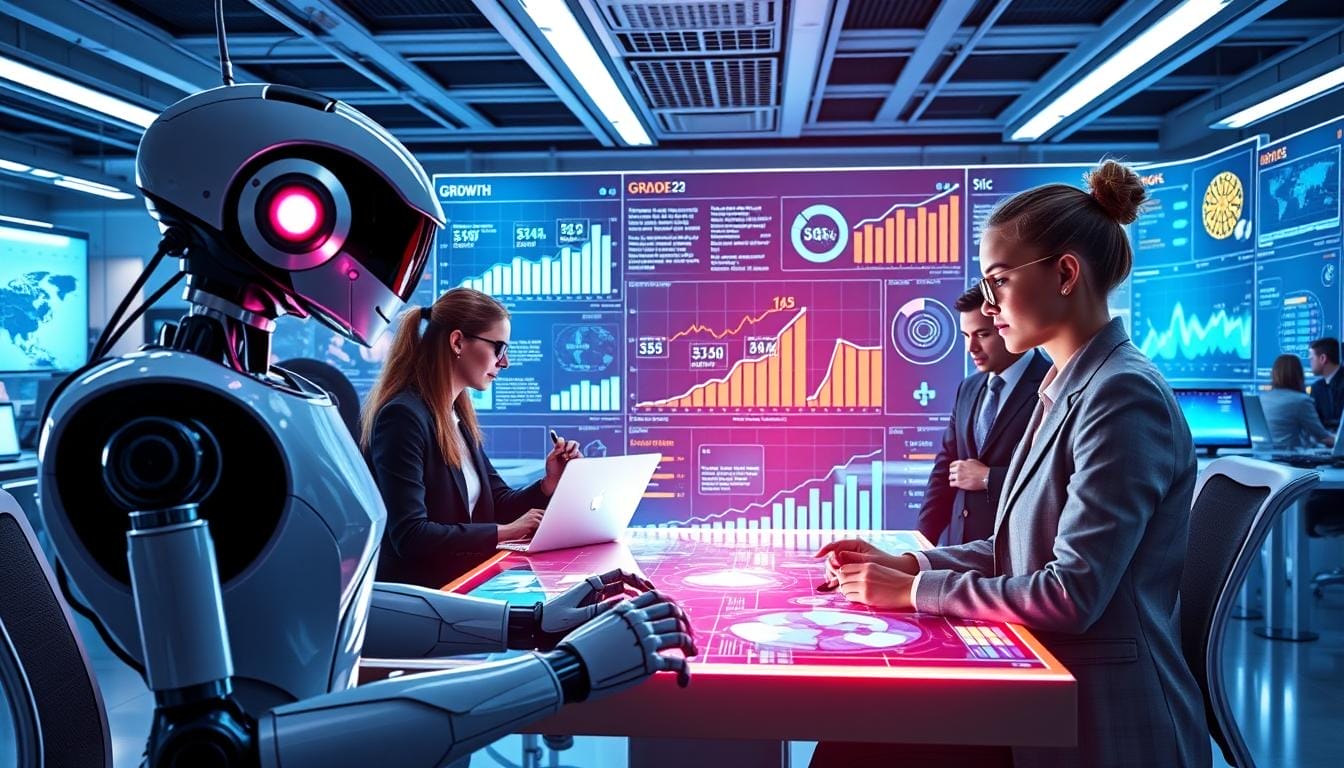
Businesses increasingly depend on AI to remain competitive in rapidly changing markets. Automation reduces repetitive work, allowing employees to focus on strategic decision-making and creative problem-solving.
AI supports organizations by:
- Automating customer interactions
- Improving supply chain management
- Forecasting market trends
- Optimizing pricing strategies
- Enhancing employee productivity
- Detecting business risks early
Companies adopting AI technologies often experience improved efficiency, faster response times, and better resource allocation. newsreversecom emphasizes that AI adoption is becoming a strategic investment rather than an optional technology upgrade.
The Role of AI in Healthcare Innovation
Healthcare has become one of the largest beneficiaries of artificial intelligence. Advanced algorithms analyze medical images, patient histories, laboratory reports, and genetic information to support doctors in making faster and more accurate diagnoses.
AI-powered systems assist hospitals by monitoring patient conditions continuously, identifying disease risks, and recommending personalized treatment plans. Robotic-assisted surgeries improve precision while minimizing recovery times.
Virtual healthcare assistants answer patient questions, schedule appointments, and provide medication reminders, improving overall patient engagement. Researchers also use AI to accelerate drug discovery by analyzing millions of biological data points within days instead of years.
These innovations contribute to improved healthcare accessibility, reduced medical errors, and more efficient treatment outcomes worldwide.
AI and the Future of Smart Cities
Artificial intelligence plays a central role in building smarter, safer, and more sustainable cities. Governments use AI to optimize transportation systems, monitor energy consumption, improve waste management, and enhance public safety.
Traffic management systems analyze real-time vehicle movement to reduce congestion. Smart surveillance detects unusual activities while respecting operational requirements. Intelligent energy grids balance electricity demand efficiently, reducing environmental impact.
AI also improves emergency response by identifying incidents faster and coordinating rescue resources effectively. As urban populations continue growing, AI-driven city management will become increasingly important for maintaining infrastructure and improving quality of life.
Challenges Facing Artificial Intelligence
Although AI delivers numerous advantages, organizations must address several important challenges before widespread adoption.
Major concerns include:
- Data privacy protection
- Algorithm transparency
- Ethical decision-making
- Cybersecurity threats
- Workforce reskilling
- Regulatory compliance
- Bias in training datasets
Responsible AI development requires collaboration among technology companies, governments, researchers, and policymakers to establish ethical standards while encouraging continued innovation.
According to discussions featured by newsreversecom, balancing innovation with accountability will remain one of the defining priorities of future AI development.
Emerging AI Trends for the Next Decade
Artificial intelligence continues evolving at an extraordinary pace. Several emerging trends are expected to reshape industries over the next ten years.
Future developments include:
- Autonomous business operations
- AI-powered scientific research
- Intelligent robotics
- Personalized education systems
- Advanced climate prediction models
- Human-AI collaboration tools
- Smarter cybersecurity defense systems
- Edge AI for faster real-time processing
These innovations will create new employment opportunities while transforming existing business models. Organizations investing in AI today are likely to gain significant competitive advantages as these technologies mature.
Industry experts featured through newsreversecom believe future AI systems will become more adaptive, efficient, and capable of solving increasingly complex real-world challenges.
Why Continuous AI Learning Matters
Artificial intelligence changes rapidly, making continuous education essential for professionals, students, entrepreneurs, and technology enthusiasts. Learning about new AI tools, industry applications, ethical practices, and emerging innovations helps individuals remain competitive in today’s evolving job market.
Businesses also benefit by regularly training employees to use AI responsibly and effectively. Organizations that promote AI literacy are better equipped to adopt new technologies successfully while minimizing implementation risks.
Understanding AI is no longer reserved for software engineers. Marketing professionals, healthcare providers, financial analysts, educators, manufacturers, and government agencies all benefit from developing AI knowledge relevant to their industries.
Following trusted industry insights, including updates shared through newsreversecom, enables readers to stay informed about the latest developments shaping global technology.
Conclusion
Artificial intelligence has become one of the most influential technologies of the modern era, transforming industries, improving decision-making, and creating entirely new opportunities for innovation. From healthcare and finance to manufacturing, education, transportation, and smart cities, AI continues delivering measurable improvements that enhance productivity, efficiency, and customer experiences. As technology advances, organizations that embrace responsible AI adoption will be better prepared for future challenges while maintaining a competitive advantage. Continuous learning, ethical implementation, and strategic investment remain essential for maximizing AI’s long-term benefits. The insights presented by newsreversecom demonstrate how rapidly artificial intelligence is evolving and why staying informed has never been more important. By understanding today’s latest AI innovations, businesses and individuals can confidently prepare for a future where intelligent technology becomes an integral part of everyday life.