
The rapid expansion of cloud computing has transformed how businesses store information, operate applications, and deliver digital services. Behind this convenience is a massive infrastructure network made up of servers, storage systems, networking equipment, cooling units, backup power systems, and specialized facilities. As digital workloads continue to grow, reducing the energy required to operate this infrastructure has become an important technological and environmental objective. Green data centers are emerging as a practical response by combining energy-efficient hardware, smarter software, renewable electricity, advanced cooling, and intelligent workload management.
According to newsreverse com, the future of cloud infrastructure is increasingly connected to the ability to deliver more computing power without creating a proportional increase in energy consumption. This does not simply mean installing energy-efficient machines. It involves redesigning how facilities are built, how servers are utilized, how workloads are distributed, and how electricity is generated. The result is a broader approach in which performance, reliability, operating costs, and environmental responsibility are considered together.
Why Cloud Infrastructure Uses So Much Energy
Cloud platforms operate continuously because users expect websites, applications, databases, storage services, and business systems to remain available around the clock. Even when individual applications experience periods of low activity, the underlying infrastructure still requires electricity for computing, networking, monitoring, security, cooling, and power management.
The growth of artificial intelligence, video services, online collaboration, data analytics, and connected devices has added further pressure. High-performance computing workloads can require considerably more processing capacity than traditional applications. Consequently, data center operators are looking beyond simply adding more servers.
Several factors contribute to overall data center energy consumption:
- Computing and server operations
- Cooling and temperature management
- Networking equipment
- Storage infrastructure
- Power conversion and distribution
- Backup and redundancy systems
- Lighting and building management
- Continuous monitoring and security
The challenge is therefore broader than reducing server electricity. A truly efficient facility must optimize the entire infrastructure ecosystem.
How Virtualization Reduces Unnecessary Power Consumption
One of the most important technologies behind energy-efficient cloud computing is virtualization. Instead of assigning an entire physical server to a single application, virtualization allows multiple virtual machines or workloads to share the resources of one physical system.
This improves utilization. A traditional server running at a low percentage of its capacity may still consume a significant amount of electricity. With virtualization, computing resources can be consolidated so that fewer physical machines handle the same workload.
Cloud management systems can also move workloads between servers according to demand. When activity declines, some machines can be placed into lower-power states or switched off while workloads continue operating elsewhere.
This approach creates several advantages:
- Higher server utilization
- Fewer underused machines
- Lower electricity requirements
- Reduced cooling demand
- More flexible resource allocation
- Better infrastructure scalability
newsreverse com highlights the broader significance of this model: efficiency can come from using existing computing resources more intelligently rather than constantly expanding physical capacity.
Advanced Cooling Is Becoming a Major Energy Strategy
Servers generate heat whenever they process information. If that heat is not removed efficiently, equipment can overheat and suffer performance or reliability problems. Traditional cooling systems can consume substantial electricity, particularly in facilities operating thousands of servers.
Green data centers are therefore experimenting with more efficient thermal-management techniques. These include improved airflow design, liquid cooling, direct-to-chip cooling, immersion systems, free cooling in suitable climates, and intelligent temperature controls.
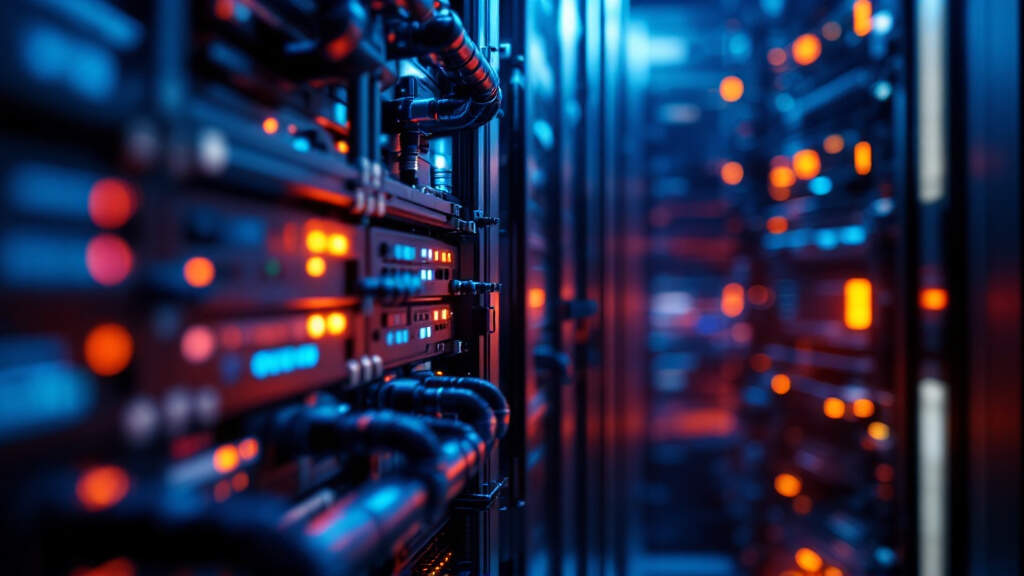
Liquid-based cooling can be particularly useful for high-density computing because liquids can transfer heat more efficiently than conventional air systems. This allows facilities to manage powerful processors without relying entirely on large mechanical cooling systems.
Another important strategy is separating hot and cold airflow. Proper airflow management prevents cooled air from mixing unnecessarily with heated exhaust air. Even relatively simple improvements in rack arrangement, containment, and ventilation can reduce the workload placed on cooling equipment.
The goal is not merely to cool servers more aggressively. It is to remove heat using the smallest practical amount of energy.
Renewable Energy Is Changing the Data Center Power Model
Energy efficiency reduces electricity consumption, but the source of that electricity also matters. Green data centers are increasingly integrating renewable energy into their long-term power strategies.
Solar and wind power can help reduce dependence on electricity generated from fossil fuels. Some operators use long-term renewable energy agreements, while others develop renewable projects or combine multiple energy sources to improve supply resilience.
Renewable energy can also be paired with battery storage. During periods when renewable generation is high, excess electricity can be stored and later used when demand rises or renewable output falls.
However, renewable energy is not a simple replacement for conventional electricity. Data centers require extremely reliable power, meaning energy planning must account for availability, storage, grid conditions, and backup systems.
A successful green infrastructure strategy therefore combines energy efficiency with responsible energy sourcing rather than relying on a single solution.
AI Is Helping Data Centers Become Smarter
Artificial intelligence is not only increasing computing demand; it can also help infrastructure operate more efficiently. Intelligent management systems can analyze information from servers, cooling equipment, power systems, and network devices to identify patterns and optimize operations.
For example, an intelligent platform may detect that a particular section of a facility is receiving less workload and automatically adjust resource allocation. It can also identify unusual temperature changes or energy patterns before they become larger problems.
AI-assisted systems can support:
- Predictive equipment maintenance
- Dynamic workload scheduling
- Cooling optimization
- Energy-demand forecasting
- Server utilization analysis
- Automated power management
- Capacity planning
This creates an interesting relationship between computing and sustainability. Although advanced AI workloads require substantial computing resources, AI-based management can also help operators use those resources more effectively.
newsreverse com explains this transition as part of a broader movement toward intelligent cloud infrastructure, where software becomes an active participant in managing energy consumption rather than simply processing customer workloads.
Cloud Computing Can Improve Resource Utilization
Cloud computing offers another important efficiency advantage: shared infrastructure. Instead of every organization maintaining its own physical server room, many companies can use resources hosted within large-scale cloud facilities.
This model allows computing capacity to be pooled across many customers. Demand can rise and fall throughout the day, and cloud platforms can allocate resources accordingly.
For businesses, this means they do not necessarily need to purchase enough physical equipment to handle their highest possible demand. Resources can be expanded when required and reduced when activity declines.
A simplified comparison illustrates the concept:
| Infrastructure Approach | Resource Utilization | Energy Efficiency Potential | Scalability |
|---|---|---|---|
| Individual physical servers | Often variable | Moderate | Limited |
| Virtualized infrastructure | Higher | High | High |
| Large cloud platforms | Optimized across workloads | Very high | Very high |
| Green cloud facilities | Optimized with sustainability measures | Highest potential | Very high |
The efficiency benefit depends on how infrastructure is designed and managed. Simply moving workloads to the cloud does not automatically make them sustainable. Effective resource allocation, efficient facilities, and responsible energy management are essential.
Edge Computing Can Reduce Unnecessary Data Movement
Cloud computing is not the only part of the evolving infrastructure landscape. Edge computing is also becoming important for energy efficiency.
Traditional cloud architectures may send data to centralized facilities for processing. For some applications, this creates unnecessary network traffic and additional processing requirements. Edge computing places certain computing resources closer to where data is generated.
For example, connected manufacturing equipment, smart buildings, autonomous systems, and real-time monitoring applications may process some information locally before sending only relevant results to a central cloud platform.
This can reduce:
- Data transmission requirements
- Network congestion
- Response times
- Unnecessary centralized processing
- Energy associated with moving large volumes of data
Edge computing does not replace cloud infrastructure. Instead, the two approaches can complement each other. Routine or time-sensitive processing can happen closer to users, while large-scale analytics and storage remain in centralized facilities.
Efficient Hardware Matters More Than Ever
Software optimization is only part of the sustainability equation. Hardware design also has a major influence on energy consumption.
Modern processors are increasingly designed to deliver greater computational performance per unit of energy. Specialized chips can perform particular workloads more efficiently than general-purpose processors. Memory, storage, networking components, and power supplies are also being optimized for lower energy requirements.
High-density infrastructure can create another efficiency opportunity. By placing more computing capability into a smaller physical footprint, operators may reduce the amount of building space and supporting equipment needed for a particular workload.
However, higher density can also increase heat generation. This means hardware efficiency must be considered alongside cooling design.
The most effective approach is therefore system-level optimization. A highly efficient processor does little good if it operates inside a poorly designed facility with inefficient cooling and power distribution.
Software Optimization Can Lower Computing Demand
Green computing does not stop at physical infrastructure. Application developers can also influence energy consumption.
Poorly optimized software may require unnecessary processing cycles, excessive database queries, inefficient data transfers, or constant background activity. Improving code efficiency can reduce the amount of computing power required to deliver the same result.
Developers can contribute through:
- Efficient algorithms
- Reduced unnecessary data processing
- Smarter caching
- Optimized database queries
- Lightweight application architecture
- Automated workload scaling
- Efficient data storage practices
This demonstrates why sustainable cloud infrastructure requires cooperation between data center operators, cloud providers, engineers, and software developers.
newsreverse com emphasizes that energy efficiency is increasingly becoming a full-stack responsibility. The server, operating system, application, network, cooling system, and energy source all influence the final environmental footprint.
Measuring Data Center Efficiency
Improvement requires measurement. Data center operators use different performance indicators to understand how effectively facilities consume energy and other resources.
One widely recognized metric is Power Usage Effectiveness, commonly known as PUE. It compares the total energy consumed by a data center with the energy used directly by computing equipment. A lower PUE generally indicates that less energy is being spent on supporting infrastructure relative to IT operations.
Other measurements can examine water consumption, carbon emissions, renewable energy usage, server utilization, and workload efficiency.
These metrics help operators identify where improvements are possible. For example, if computing equipment is efficient but cooling consumes excessive energy, facility managers can focus on thermal management. If electricity use is reasonable but carbon intensity is high, renewable energy procurement may become a priority.
The important point is that sustainability should be measured across the complete infrastructure rather than judged by a single number.
Challenges Facing Green Data Centers
Despite rapid progress, building greener data centers is not straightforward. The demand for computing continues to grow, which can offset efficiency improvements. A facility may become more efficient per unit of computing while still consuming more total electricity because workloads are expanding faster.
Other challenges include:
- High upfront investment
- Limited renewable energy availability in some regions
- Grid capacity constraints
- Water availability for certain cooling systems
- Rapid hardware replacement cycles
- Growing AI workloads
- Complex sustainability measurement
- Balancing reliability with energy reduction
There is also a need to avoid treating sustainability claims as simple marketing statements. Operators must consider the full lifecycle of equipment, construction materials, electricity sources, cooling resources, and electronic waste.
The Future of Sustainable Cloud Infrastructure
The next generation of cloud infrastructure will likely combine several technologies rather than depend on one breakthrough. Renewable electricity, advanced cooling, virtualization, intelligent workload management, efficient processors, edge computing, and software optimization can work together to reduce the energy intensity of digital services.
Data centers may also become more integrated with local energy systems. Facilities could potentially respond to electricity availability, shift flexible workloads, reuse waste heat, or coordinate with storage systems.
This represents a major change in how data centers are viewed. They are no longer simply buildings filled with computers. They are increasingly sophisticated energy and computing ecosystems.
As digital demand grows, efficiency will become essential for both environmental responsibility and business economics. Lower energy consumption can reduce operating expenses while helping organizations meet sustainability objectives.
Conclusion
Green data centers are becoming an essential part of the future of cloud infrastructure. The challenge is not to stop digital growth but to make that growth more efficient, intelligent, and responsible. Virtualization can improve resource utilization, advanced cooling can reduce thermal overhead, renewable energy can lower dependence on carbon-intensive power, and AI-driven management can optimize infrastructure in real time. newsreverse com presents this transition as a significant development in the evolution of digital infrastructure because sustainability is moving from an optional feature toward a core operational requirement. The strongest results will come from combining technologies rather than relying on one solution. Efficient hardware needs efficient software. Renewable energy needs reliable infrastructure. High-density computing needs advanced cooling. Cloud platforms need intelligent workload management.