
Urban shipping is entering a new phase as cities struggle with congestion, rising delivery expectations, labor pressures, and increasingly complex last-mile operations. Traditional delivery vans and motorcycles remain essential, but their dependence on crowded roads can make short-distance deliveries surprisingly slow and expensive. Autonomous aerial systems offer a different approach by moving selected shipments above road traffic.
newsreverse com examines how drone delivery networks could become an important part of future urban logistics rather than simply serving as a niche technology. Instead of treating drones as isolated flying couriers, modern logistics planning increasingly considers them as components of connected networks involving warehouses, charging stations, landing points, software platforms, and human-operated vehicles.
The concept is straightforward: a package could move from a fulfillment center to a neighborhood hub, travel by autonomous drone, and then reach a customer through a designated landing area or another delivery method. This creates a flexible logistics ecosystem where different transportation modes can cooperate instead of competing.
The transformation will not happen overnight. Payload limitations, weather, regulations, safety requirements, infrastructure costs, and public acceptance all influence whether drone delivery becomes commercially practical. Nevertheless, improvements in automation and network management are making aerial logistics increasingly relevant to the future of urban shipping.
Why Traditional Urban Delivery Needs a New Approach
The final stage of delivery is often one of the most complicated parts of the supply chain. A parcel may travel hundreds of kilometers efficiently between distribution centers, only to spend considerable time navigating the last few kilometers through congested streets.
Urban delivery faces several recurring challenges:
- Heavy traffic during peak hours
- Limited parking and loading areas
- Increasing customer expectations for rapid delivery
- Higher operating expenses
- Driver availability challenges
- Frequent stop-and-start vehicle movement
- Delivery delays caused by road incidents
- Greater pressure to reduce environmental impact
Drones cannot eliminate all of these problems, but they can bypass some of the physical constraints associated with roads. A lightweight package does not necessarily need a full-size delivery vehicle if an autonomous aircraft can transport it directly between strategically positioned locations.
This becomes especially interesting for urgent goods. Medicines, replacement components, documents, groceries, and small electronics could potentially benefit from rapid aerial transportation when speed matters more than carrying capacity.
How Autonomous Drone Delivery Networks Work
A large-scale drone system requires far more than aircraft. The real innovation lies in coordinating numerous physical and digital components into one functioning network.
A typical operation could begin when an order enters a logistics platform. Software evaluates the package size, destination, delivery deadline, weather conditions, available drones, battery levels, and permitted flight routes.
The system then determines whether a drone should handle the shipment or whether another transportation method is more appropriate.
A simplified process may look like this:
- Order processing: The logistics system receives the delivery request.
- Package assessment: Weight, dimensions, destination, and urgency are evaluated.
- Route planning: Software selects an appropriate aerial or hybrid route.
- Drone assignment: An available aircraft is matched to the shipment.
- Automated flight: The drone follows its approved navigation path.
- Delivery handoff: The package reaches the customer or a designated collection point.
- Fleet recovery: The drone returns, recharges, or continues to another assignment.
This network-based model is more important than simply increasing the number of drones. A hundred poorly coordinated drones could create operational problems, while a smaller fleet connected to intelligent infrastructure could potentially deliver better performance.
The Role of Artificial Intelligence in Drone Logistics
Autonomous delivery depends heavily on software intelligence. A drone must make decisions about navigation, battery consumption, weather conditions, obstacles, package handling, and destination timing.
Artificial intelligence can help logistics platforms analyze large volumes of operational data and make decisions in real time. Instead of relying on fixed routes, future systems could continuously adjust delivery plans according to changing conditions.
For example, if a particular flight corridor becomes unavailable, the network could identify another route. If a drone’s battery level becomes insufficient for a planned mission, the system could reassign the package to another aircraft or direct the drone to a charging station.
AI can also help forecast demand. If an urban neighborhood consistently generates high delivery volumes during certain hours, operators could position drones and charging capacity nearby before demand peaks.
newsreverse com highlights the importance of this intelligence layer because the future of autonomous logistics will depend as much on coordination software as on aircraft design.
Drone Hubs Could Become the New Logistics Infrastructure
A major challenge for urban drone delivery is deciding where aircraft should launch, land, recharge, and exchange packages.
This creates the possibility of dedicated drone hubs positioned near:
- Shopping centers
- Warehouses
- Apartment complexes
- Hospitals
- Business districts
- Transit stations
- Local fulfillment centers
- Community collection points
These hubs could operate similarly to miniature logistics terminals. A drone might arrive with one package, recharge its battery, collect another shipment, and continue to a nearby destination.
The network could become even more efficient when multiple businesses share infrastructure. Instead of every retailer creating its own drone fleet and landing stations, several companies could potentially use common facilities.
Such shared infrastructure could lower costs and improve utilization, particularly in dense urban areas where space is expensive.
Comparing Drone Delivery With Traditional Urban Shipping
Drones will not automatically replace delivery vehicles. Each transportation method has different strengths, making a mixed logistics model more practical.
| Factor | Delivery Vehicles | Autonomous Drones | Hybrid Network |
|---|---|---|---|
| Road congestion | Highly affected | Mostly bypassed | Reduced for selected trips |
| Payload capacity | High | Limited | Flexible |
| Short urgent deliveries | Moderate | Strong potential | Very strong |
| Weather sensitivity | Moderate | Higher | Manageable |
| Infrastructure | Roads and depots | Hubs and charging points | Both |
| Operating flexibility | High | Growing | Very high |
| Best use case | Bulk deliveries | Lightweight urgent parcels | Mixed urban logistics |
The hybrid approach may ultimately prove the most useful. Trucks and vans can transport larger quantities to neighborhood facilities, while drones handle selected short-distance deliveries.
This would turn drones into specialized tools within a larger supply chain rather than forcing them to perform every delivery.
How Drone Networks Could Improve Delivery Speed
Speed is one of the strongest arguments for autonomous aerial logistics. A drone traveling directly between two points does not face the same traffic conditions as a road vehicle.
Consider a small medical package that must travel across a busy metropolitan area. A van could encounter multiple traffic bottlenecks, parking delays, and intersections. A drone could potentially follow a more direct aerial path, assuming the route is legally permitted and operationally safe.
Faster delivery could benefit several industries:
- Healthcare and pharmacies
- Online grocery services
- Restaurants
- Electronics retailers
- Spare-parts suppliers
- Emergency response organizations
- E-commerce businesses
However, speed should not be measured only from takeoff to landing. The entire process matters, including package preparation, loading, route assignment, customer handoff, charging, and recovery.
A fast drone becomes less valuable if the supporting infrastructure is slow. Therefore, successful networks will need to optimize the complete delivery cycle.
Environmental Potential and Energy Efficiency
Urban transportation contributes to congestion and emissions, making alternative delivery systems attractive to city planners and businesses.
Electric drones could potentially reduce dependence on fuel-powered vehicles for certain lightweight deliveries. Their smaller size also means they require less physical space during operation.
However, environmental performance depends on the complete system. Manufacturing aircraft, producing batteries, building charging infrastructure, maintaining equipment, and generating electricity all have environmental costs.
The strongest sustainability gains are therefore likely to come from carefully designed networks rather than indiscriminate drone deployment.
For example, replacing a large vehicle trip with a small electric aircraft carrying one lightweight parcel may be inefficient in some circumstances. But consolidating shipments and using drones for high-priority deliveries in congested areas could create a more compelling efficiency case.
Safety and Airspace Management Remain Major Challenges
The idea of thousands of autonomous drones flying above cities raises obvious safety questions.
Urban drone networks must account for buildings, aircraft, people, restricted zones, weather, communication failures, technical malfunctions, and emergency situations.
Autonomous systems need multiple layers of protection. Navigation technology must identify hazards, while network operators need mechanisms for monitoring flights and responding to unexpected conditions.
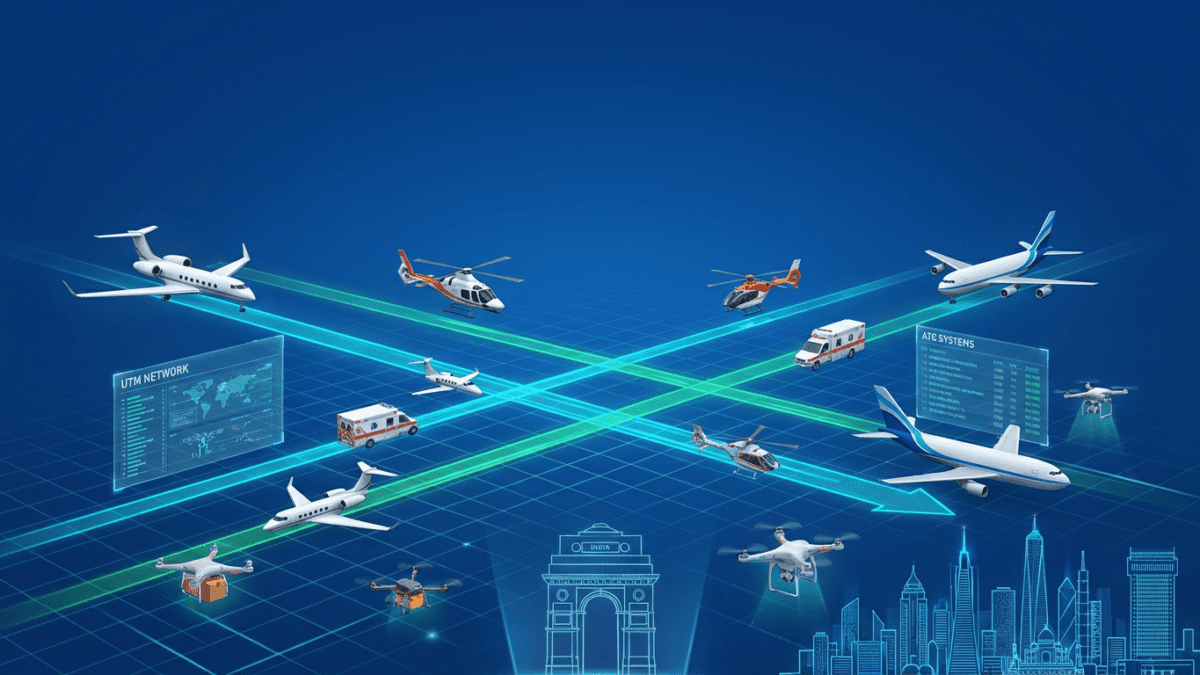
Airspace management will also become increasingly important as drone fleets expand. A small number of aircraft can be monitored relatively easily, but a large commercial network requires sophisticated coordination.
This is why autonomous delivery is not simply a robotics challenge. It is simultaneously an infrastructure, software, aviation, cybersecurity, regulatory, and urban-planning challenge.
Customer Acceptance Could Shape the Market
Technology alone does not guarantee adoption. Consumers must also feel comfortable with drones operating near their homes and businesses.
Some customers may appreciate receiving a package within minutes. Others may worry about noise, privacy, safety, or the visual impact of large numbers of aircraft.
Companies will need to demonstrate that autonomous delivery provides genuine benefits without creating unacceptable disruption.
Customer experience will also matter. A drone that arrives quickly but leaves a package in an inconvenient location may not improve satisfaction. Future systems could therefore combine aerial delivery with secure lockers, smart collection points, building-level landing areas, or controlled handoff systems.
newsreverse com notes the broader significance of this shift: successful autonomous logistics will depend on how well technology fits into everyday urban life, not simply how advanced the aircraft becomes.
The Growth of Hybrid Delivery Networks
One of the most realistic scenarios for future logistics is a hybrid network combining several transportation methods.
A shipment could travel through a distribution center by truck, move to a local hub, fly by drone across a congested area, and finally reach the customer through a secure collection point.
This approach provides flexibility because different vehicles can be used according to their strengths.
For instance:
- Trucks can handle heavy and consolidated shipments.
- Electric vans can cover neighborhoods efficiently.
- Drones can handle urgent lightweight parcels.
- Autonomous ground robots can operate in controlled areas.
- Human couriers can complete complex doorstep deliveries.
The logistics platform becomes the central decision-maker, selecting the most appropriate option for each package.
This could lead to a future where customers do not necessarily know which vehicle transported their order. They simply receive a faster, more reliable service.
What Businesses Need to Prepare For
Companies considering drone logistics should avoid viewing the technology as a simple replacement for delivery vans. Successful adoption requires strategic planning.
Businesses should consider:
- Which products are suitable for aerial delivery
- Where neighborhood hubs should be located
- How drones will integrate with warehouses
- What charging infrastructure is required
- How weather disruptions will be handled
- Which deliveries justify premium speed
- How customers will receive packages
- What regulatory approvals may be necessary
- How autonomous systems will be monitored
- How cybersecurity risks will be managed
Pilot programs can help companies determine whether drones actually improve economics and customer satisfaction in specific delivery zones.
The strongest opportunities may emerge where congestion is severe, delivery distances are relatively short, and packages are lightweight enough for efficient aerial transportation.
The Economic Impact on Urban Logistics
Drone delivery networks could influence the economics of last-mile logistics in several ways. Reduced travel time may improve delivery capacity, while automation could change how companies allocate human workers.
However, savings are not guaranteed. Operators must invest in aircraft, software, charging infrastructure, maintenance, safety systems, insurance, and specialized personnel.
The business case therefore depends on utilization. A drone sitting on a charging pad most of the day provides little value. High fleet utilization, efficient routing, and strategically placed infrastructure are essential for sustainable operations.
Over time, network effects could become important. As more hubs are introduced, drones may have access to more routes and charging points, making the network increasingly useful.
What the Future of Urban Shipping Could Look Like
The future city may not have one dominant delivery method. Instead, it could have an interconnected transportation ecosystem where autonomous drones, electric vehicles, warehouses, robots, and human workers operate as a coordinated network.
Packages could be automatically categorized according to urgency, weight, distance, weather, traffic, and cost. Software would then determine the most suitable delivery method.
A customer ordering a small product could receive it through a drone when conditions are favorable. A larger shipment might arrive by electric van. A time-sensitive medical item could receive priority through an aerial route.
newsreverse com sees this network-based approach as one of the most important ideas behind autonomous logistics. The future is unlikely to be about drones replacing everything. It is more likely to involve drones becoming one intelligent layer within a much broader urban transportation system.
Conclusion
Drone delivery networks have the potential to reshape urban shipping by reducing dependence on congested roads, accelerating selected deliveries, and introducing a new layer of automation into logistics. Their greatest value may come not from replacing conventional transportation but from working alongside it. The road ahead remains complicated. Regulations, safety, infrastructure, weather, battery performance, cybersecurity, operating costs, and public acceptance must all be addressed before large-scale adoption becomes routine. Yet the direction is clear. Logistics is moving toward greater automation, real-time decision-making, and interconnected transportation networks. As these technologies mature, drones could become an increasingly visible part of urban commerce.