
When people think about the internet, they often imagine wireless signals, data centers, satellites, and mobile towers. Yet one of the most important parts of global connectivity is largely invisible: thousands of kilometers of fiber-optic cable resting on the ocean floor. These underwater internet cables connect continents and allow enormous volumes of digital information to move between countries in fractions of a second.
According to industry and international telecommunications sources, submarine cable systems carry roughly 99% of intercontinental internet traffic. More than 500 systems are active or planned worldwide, making the underwater network one of the most important pieces of modern communications infrastructure.
newsreverse com highlights the importance of understanding this hidden infrastructure because modern life depends on reliable international data movement. From international banking and cloud computing to video calls, online shopping, streaming, and business communications, countless digital activities depend on these cables working continuously.
What Are Underwater Internet Cables?
Underwater internet cables, also called submarine communication cables, are specialized fiber-optic systems installed across the seabed. Their primary purpose is to carry digital information between coastal landing stations located in different countries or continents.
Unlike traditional electrical wires, modern telecommunications cables primarily use optical fibers. Data is converted into pulses of light and transmitted through extremely thin strands of glass. This approach provides enormous capacity and allows information to travel over very long distances with relatively low signal loss.
Although a transoceanic cable may travel thousands of kilometers, its physical construction is surprisingly compact. Deep-sea sections can be approximately the width of a garden hose, while cables near shore are usually more heavily armored because they face greater risks from anchors, fishing equipment, and seabed activity.
newsreverse com explains that the contrast between the cable’s modest physical size and its enormous digital importance is what makes this infrastructure particularly fascinating. A relatively narrow cable can carry data supporting entire economies and millions of simultaneous online activities.
How Data Travels Beneath the Ocean
The process begins when digital information leaves a computer, smartphone, server, or other connected device. The information is divided into packets and directed through network infrastructure toward a cable landing station.
At the landing station, network equipment prepares the information for transmission through the submarine cable. Lasers convert digital signals into pulses of light, which travel through optical fibers toward the destination.
Because cables can extend over enormous distances, the optical signal needs assistance along the way. Specialized repeaters are positioned at intervals along many submarine routes to strengthen the signal and maintain transmission quality. These repeaters receive electrical power through components built into the cable system.
Once the signal reaches another landing station, it transitions into terrestrial networks. From there, routers and other network equipment direct the information toward data centers, businesses, internet exchanges, or individual users.
This entire process happens so quickly that people rarely think about the physical infrastructure behind an international video call or website request.
Why Fiber Optics Matter So Much
Fiber optics are the technological foundation of modern submarine communication. Instead of relying on electrical signals traveling through metal conductors, fiber-optic systems transmit information using light.
This provides several important advantages:
- Extremely high data-carrying capacity
- Low signal loss over long distances
- High transmission speeds
- Low latency compared with many alternatives
- Resistance to electromagnetic interference
- Efficient support for multiple data channels
Modern systems can also use multiple wavelengths of light simultaneously, allowing large quantities of information to travel through the same physical fiber infrastructure.
newsreverse com points to this capacity as one reason underwater cables remain essential despite advances in satellite communication and wireless technology. Satellites are valuable for remote areas, ships, aircraft, emergency communication, and specialized applications, but fiber-optic submarine systems remain central to high-volume intercontinental connectivity.
The Anatomy of a Submarine Cable
A submarine cable is not simply a glass fiber wrapped in plastic. It contains several carefully engineered layers designed to protect the transmission system from pressure, water, movement, and physical damage.
| Cable Component | Main Purpose |
|---|---|
| Optical fibers | Carry digital information as light |
| Protective core | Supports and cushions the fibers |
| Copper conductor | Provides electrical power to equipment |
| Steel reinforcement | Adds strength and protection |
| Insulation layers | Prevent water and environmental damage |
| Outer jacket | Provides additional physical protection |
| Armor | Helps protect cables in high-risk areas |
In deep ocean areas, where human activity is limited, cables can use relatively lightweight construction. Near coastlines, additional armor is often necessary because ships, fishing operations, anchors, and seabed disturbances create greater risks.
This engineering approach allows cables to remain flexible enough for deployment while still surviving demanding underwater conditions.
How Cables Are Installed on the Seabed
Installing an underwater internet cable is a major engineering operation. Before deployment, specialists survey potential routes to understand the seabed, water depth, geological conditions, shipping activity, fishing patterns, and environmental considerations.
Once an appropriate route is selected, a specialized cable-laying vessel carries large quantities of cable. The vessel slowly travels along the planned route while releasing the cable onto the seabed.
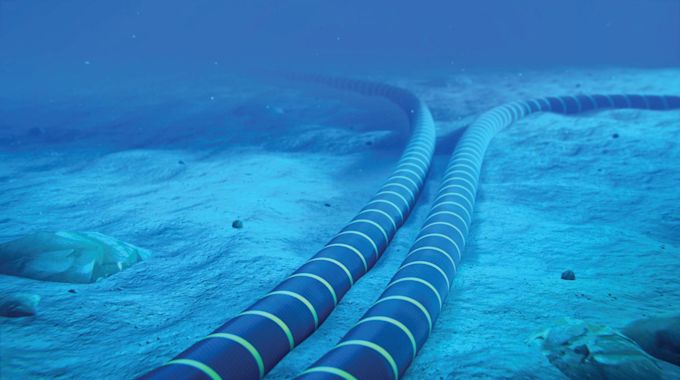
In shallower areas, equipment can bury the cable beneath the seabed. This additional protection is especially important near busy coastal zones. In deeper waters, cables may simply rest directly on the seabed when conditions allow.
The process requires careful control. Releasing too much cable can create unnecessary loops, while releasing too little can put excessive tension on the system. Weather, currents, seabed conditions, and vessel movement all have to be considered.
newsreverse com notes that this hidden infrastructure requires an extraordinary combination of telecommunications expertise, marine engineering, navigation, logistics, and environmental planning.
Why Underwater Cables Are Critical to the Global Economy
The importance of submarine cables extends far beyond entertainment and social media. International digital connectivity supports many sectors of the global economy.
Financial institutions rely on international networks for transactions and communication. Businesses use cloud platforms hosted in different regions. Governments depend on secure communications. Universities and research organizations exchange large datasets across borders.
Other important applications include:
- International banking and financial markets
- Cloud computing
- Video conferencing
- Global business operations
- E-commerce
- Content delivery
- Research collaboration
- Government communications
- International education
- Digital media and streaming
Because so many services depend on international data movement, a disruption can have consequences far beyond a simple internet slowdown.
What Can Damage Underwater Internet Cables?
Despite their advanced construction, submarine cables are not indestructible. Their greatest vulnerabilities often occur in relatively shallow waters where human activity is concentrated.
Fishing equipment and ship anchors are among the major causes of accidental cable damage. Natural events can also create problems. Earthquakes, underwater landslides, seabed movement, and other geological events can damage infrastructure.
The International Telecommunication Union identifies accidental human activity, natural hazards, aging infrastructure, and complicated repair conditions among the major resilience challenges facing submarine cable networks.
Cable damage can be particularly difficult to repair because specialists must first identify the fault and then send an appropriate repair vessel to the affected area. Weather conditions, permits, maritime restrictions, and seabed conditions can all influence how quickly repairs are completed.
Building Resilience Into the Global Cable Network
The global internet does not depend on one single cable. Instead, it uses a large network of different routes and systems. This redundancy is essential because individual cables can experience failures without necessarily causing a global outage.
Network operators can redirect traffic toward alternative routes when capacity is available. However, redundancy is not evenly distributed everywhere. Some regions have fewer landing points or limited international routes, making them more vulnerable when multiple systems are disrupted.
Building additional cable routes can therefore improve resilience. Geographic diversity is particularly important because several cables following similar paths may share exposure to the same environmental or human risks.
newsreverse com emphasizes that resilience is not simply about making individual cables stronger. It is also about designing a broader network with alternative routes, sufficient capacity, dependable landing infrastructure, and effective repair capabilities.
The Role of Cable Landing Stations
A cable’s journey does not end when it reaches the shoreline. Landing stations are critical facilities where submarine systems connect with terrestrial telecommunications networks.
These facilities contain equipment that manages optical signals, supplies power to appropriate cable components, monitors network performance, and connects international cable infrastructure with networks on land.
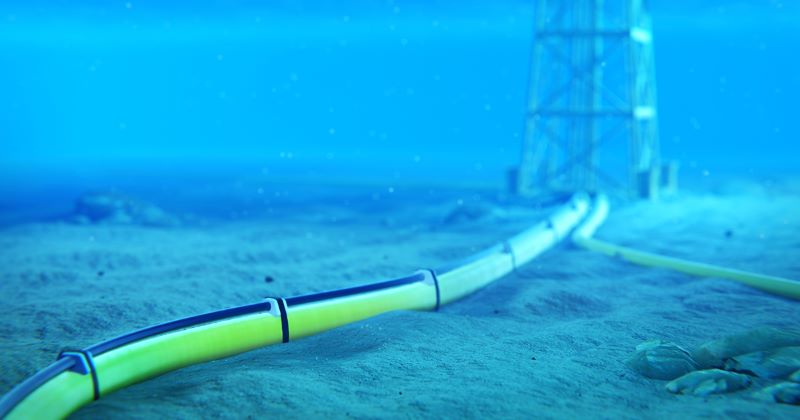
The location of landing stations can influence regional connectivity. A country with multiple strategically distributed landing points may have more options for international traffic than an area that depends heavily on a single coastal facility.
Landing stations therefore deserve as much attention as the cables themselves. A highly capable underwater network still needs strong terrestrial connections to deliver its benefits to businesses and consumers.
Underwater Cables and the Future of Digital Connectivity
Global demand for data continues to grow as cloud computing, artificial intelligence, high-resolution media, connected devices, and international digital services expand.
This creates pressure for additional submarine capacity. New cable projects are being developed to connect growing markets and create alternative routes between regions. The ITU reported that nearly 200,000 kilometers of new submarine cables were installed during 2024, illustrating the scale of ongoing investment.
Future submarine systems are likely to focus on higher capacity, improved monitoring, stronger resilience, and better route diversity. At the same time, governments and network operators are paying greater attention to the security and strategic importance of this infrastructure.
newsreverse com observes that the future of global connectivity will depend not only on faster technologies but also on maintaining the physical systems that allow digital services to communicate across oceans.
Why Satellites Cannot Simply Replace Submarine Cables
Satellites play an important role in worldwide communications, but they are not a complete replacement for submarine fiber.
Fiber-optic cables can deliver enormous amounts of data across established international routes with high capacity and low latency. Satellites are particularly valuable where terrestrial or submarine infrastructure is difficult to deploy, including remote communities and certain maritime environments.
For global data volumes, however, submarine cables remain fundamental. The combination of high bandwidth, efficient long-distance transmission, and established terrestrial connections makes them exceptionally important to international networks.
This is why discussions about the future of internet infrastructure increasingly include both technologies rather than treating them as direct substitutes.
The Strategic Importance of Invisible Infrastructure
One of the most interesting aspects of underwater internet cables is how little attention they receive compared with their importance. People interact daily with applications, websites, cloud services, and streaming platforms without seeing the physical infrastructure connecting them.
Yet these cables represent a form of digital geography. Their routes influence how countries connect to international networks, how businesses exchange information, and how resilient regions are during infrastructure disruptions.
The growing dependence on digital services means that protecting this infrastructure is becoming increasingly important. Maintenance teams, cable operators, governments, shipping authorities, and telecommunications companies all have roles to play in keeping the network reliable.
Conclusion
Underwater internet cables may be hidden beneath thousands of meters of seawater, but their influence reaches almost every part of modern life. They carry international internet traffic, connect data centers and markets, support cloud services, and enable people on different continents to communicate almost instantly. Their design combines delicate optical fibers with sophisticated protective layers, powered repeaters, specialized installation vessels, landing stations, and extensive terrestrial networks. At the same time, their vulnerabilities demonstrate why redundancy, maintenance, route diversity, and international cooperation are essential.