
Gaming is entering an era where powerful hardware is no longer the only route to high-quality entertainment. Cloud gaming is changing how players access demanding titles by moving much of the processing and rendering workload to remote servers. Instead of relying entirely on a local console, gaming PC, or handheld device, players can receive a streamed gaming experience through an internet connection. This approach has opened new possibilities for people who want flexibility without constantly upgrading expensive hardware.
The latest cloud gaming developments are focused on making streaming faster, more responsive, accessible, and visually impressive. Better networks, improved compression, distributed computing, artificial intelligence, and smarter server management are working together to reduce some of the traditional weaknesses of cloud gaming. As newsreverse com reviews the direction of the industry, it becomes clear that the technology is evolving from an experimental alternative into a more practical component of the modern gaming ecosystem.
Why Cloud Gaming Is Becoming More Important
Traditional gaming requires substantial computing resources. A modern AAA title can demand a powerful processor, graphics card, substantial memory, and fast storage. For many players, purchasing and maintaining that equipment can be expensive. Cloud gaming changes this equation by allowing remote infrastructure to perform much of the heavy computational work.
Players can potentially access sophisticated games through devices that would otherwise struggle to run them locally. A lightweight laptop, tablet, smartphone, smart television, or modest desktop can become a gaming terminal when supported by a capable cloud service and reliable connection.
This flexibility is one of the strongest reasons cloud gaming continues to attract attention. Players are increasingly interested in convenience, instant access, cross-device experiences, and subscription-based entertainment. Instead of waiting for lengthy installations or worrying about storage capacity, cloud-based platforms can provide a more immediate route into a gaming session.
However, convenience alone is not enough. The experience must also feel responsive. This is why current development efforts increasingly concentrate on latency, network stability, video quality, and intelligent resource management.
Low Latency Is the Central Challenge
Latency remains one of the most important technical considerations in cloud gaming. With local gaming, controller input is processed directly by the player’s device. Cloud gaming adds a communication path between the player and a remote computing environment.
Every stage of that journey matters. Input must travel to the server, the game must process it, a new frame must be rendered, and the resulting image must be encoded and delivered back to the player’s screen. If any stage becomes slow or unstable, the player may notice delayed controls, visual interruptions, or inconsistent responsiveness.
Modern cloud gaming development is therefore concentrating heavily on reducing unnecessary delays.
Important areas include:
- Servers positioned closer to major player populations
- More efficient video encoding
- Improved network routing
- Adaptive streaming technologies
- Better congestion management
- Predictive input techniques
- Faster server allocation
- Intelligent bandwidth management
The objective is not simply to increase internet speed. A fast connection can still provide a poor experience if it suffers from instability, congestion, or inconsistent latency.
Edge Computing Could Reshape Cloud Gaming
One of the most significant developments connected to cloud gaming is edge computing. Instead of processing every session from a distant centralized data center, computing resources can be positioned closer to users.
This geographical advantage can shorten the distance data needs to travel. For gaming, even relatively small improvements can make interactions feel more responsive.
Edge computing also creates opportunities for regional gaming infrastructure. Providers can potentially distribute workloads across multiple locations and assign players to appropriate servers based on network conditions, availability, and geographical proximity.
This model could become particularly valuable for fast-paced genres. Competitive shooters, racing games, fighting games, and other reaction-sensitive experiences place greater demands on responsiveness than slower strategy or turn-based titles.
As newsreverse com examines the evolution of cloud gaming infrastructure, edge computing stands out as a development that could influence not only performance but also the scalability of future platforms.
Artificial Intelligence Is Entering the Gaming Stream
Artificial intelligence is another technology with growing relevance to cloud gaming. AI can potentially assist with several parts of the streaming pipeline, from network optimization to video processing and resource allocation.
For example, intelligent systems can analyze changing network conditions and adjust streaming parameters accordingly. Rather than relying entirely on fixed settings, a platform can respond to fluctuations in bandwidth, congestion, device capabilities, and server demand.
AI may also help predict where additional computing resources will be needed. If a particular game becomes popular at a certain time, automated systems can prepare capacity before demand reaches its peak.
Potential AI applications include:
- Predictive network optimization
- Automated server allocation
- Intelligent video compression
- Bandwidth prediction
- Player-session analysis
- Hardware resource optimization
- Automated quality adjustments
The broader benefit is efficiency. Cloud gaming providers must balance excellent performance with the enormous cost of operating powerful computing infrastructure. Smarter automation could help them deliver better experiences while using resources more efficiently.
Improved Streaming Quality Beyond Resolution
For years, gaming discussions often focused heavily on resolution. Higher resolutions can certainly improve visual quality, but cloud gaming requires a broader approach.
A sharp image is not useful if it arrives late or contains distracting compression artifacts. Modern streaming systems therefore need to balance resolution, frame rate, image quality, responsiveness, and bandwidth consumption.
Adaptive streaming can dynamically change visual parameters according to network conditions. Under excellent conditions, players may receive higher-quality streams. During congestion, the system can make controlled adjustments to maintain playability.
This approach is particularly useful for households where multiple devices compete for bandwidth. A player might be streaming a game while another person is watching video content, attending a video conference, or using several connected devices.
The future of cloud gaming will therefore depend on intelligent quality management rather than simply pushing maximum resolution at all times.
Cross-Device Gaming Is Expanding
Cloud gaming is naturally suited to multi-device experiences. Because much of the computational workload occurs remotely, players can potentially move between different screens without needing equivalent hardware on each device.
A player might begin a session on a television, continue on a laptop, and later use a tablet. This type of flexibility supports a broader vision of gaming where the account and game library matter more than the physical machine.
Cross-device gaming can also reduce barriers for new players. Someone who does not own a dedicated gaming PC may still participate in premium gaming experiences through a supported device.
This shift could influence game design as well. Developers may increasingly consider screen sizes, control methods, connection quality, and session lengths across multiple device categories.
According to the broader direction highlighted by newsreverse com, cloud gaming is gradually becoming less about replacing one specific gaming machine and more about creating a flexible layer between players and their games.
Cloud Gaming and Smart TVs
Smart televisions are becoming increasingly relevant to the cloud gaming conversation. A modern television already provides a large display, internet connectivity, and access to applications. Adding cloud gaming functionality can transform the television into a potential gaming platform without requiring a traditional console.
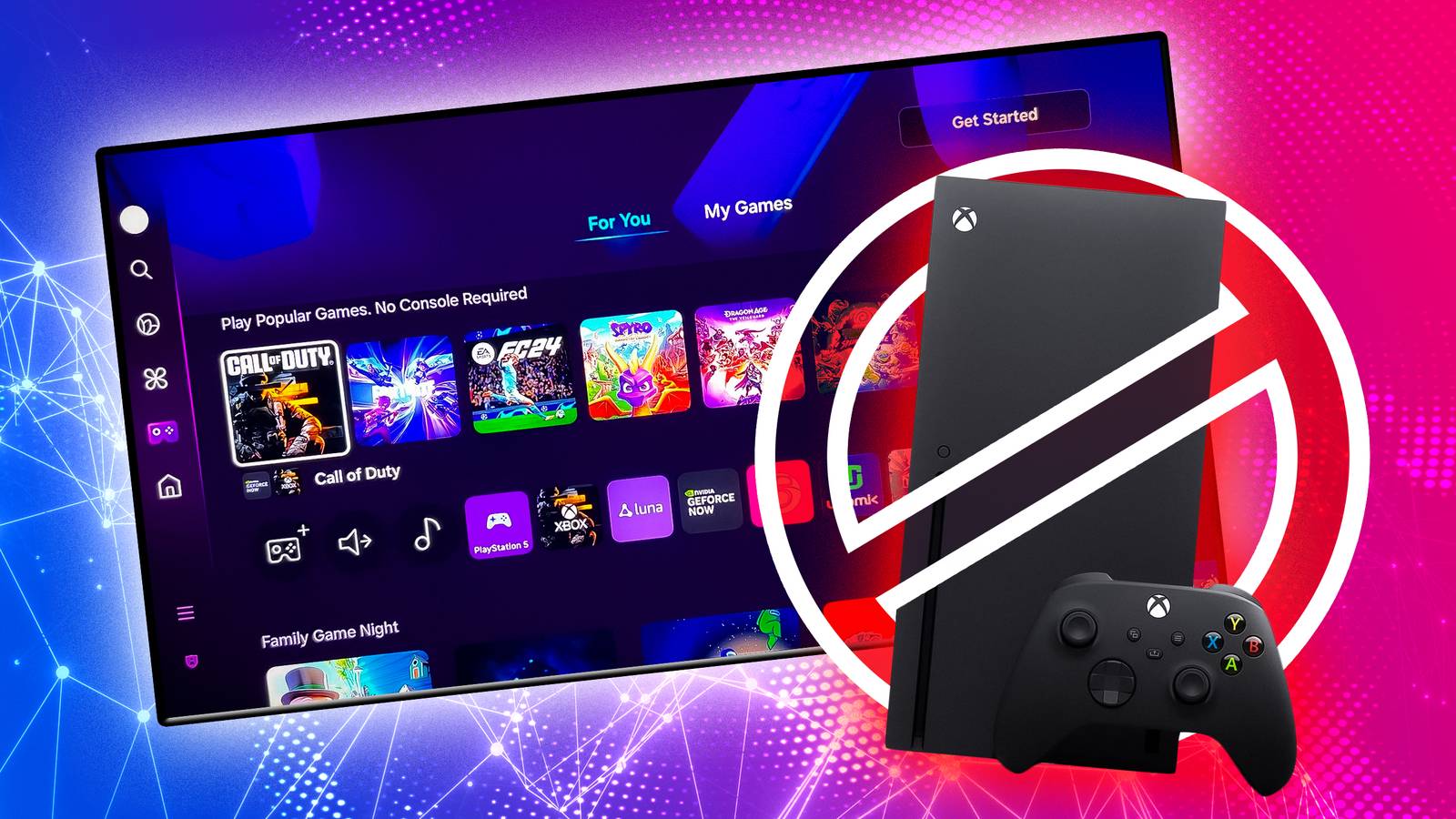
This approach offers an attractive proposition for casual and family players. Instead of purchasing a separate gaming system, users can potentially connect a controller and access compatible cloud services directly through their entertainment setup.
There are still practical considerations. Controllers, network quality, subscription costs, service availability, and input responsiveness all influence the overall experience.
Nevertheless, television-based cloud gaming demonstrates how gaming could become increasingly integrated into everyday consumer electronics.
The Role of 5G and Faster Connectivity
Mobile connectivity is another important piece of the cloud gaming puzzle. Reliable high-speed networks can make gaming possible in places where wired broadband is unavailable or inconvenient.
This could be particularly valuable for handheld gaming and mobile users. A player traveling between locations could potentially access a familiar library without carrying a high-performance computer.
However, network speed should not be confused with overall connection quality. Cloud gaming depends on stable performance, low delay, predictable packet delivery, and sufficient bandwidth.
Future connectivity improvements may therefore help cloud gaming become more practical outside traditional home environments. As network infrastructure expands, the distinction between gaming at home and gaming while mobile could become less significant.
Subscription Models Are Changing Game Access
Cloud gaming is also changing how players think about purchasing games. Traditional ownership often involves buying individual titles and downloading them. Cloud services can instead combine gaming access with subscription models.
This creates both opportunities and questions.
Players may appreciate:
- Lower initial hardware investment
- Access to large game libraries
- Flexible monthly plans
- Faster access to selected titles
- Reduced local storage requirements
- Device flexibility
At the same time, subscription services can introduce concerns around game availability, changing catalogs, recurring costs, and dependence on internet connectivity.
The most successful platforms will likely need to balance affordability with meaningful game selection and dependable technical performance.
Cloud Gaming for Competitive Players
Competitive gaming presents one of the toughest tests for cloud technology. A casual player may tolerate a small amount of delay, while a competitive player can notice extremely subtle differences in responsiveness.
This makes latency consistency particularly important.
Cloud platforms serving competitive audiences need to focus on predictable performance rather than impressive specifications alone. Server proximity, network routing, frame delivery, input handling, and display characteristics can all affect competitive play.
There is also an important question of fairness. Competitive games require players to trust that their inputs are being processed consistently. If cloud infrastructure introduces unpredictable delays, competitive users may prefer local hardware.
For this reason, cloud gaming’s progress in competitive environments will probably be measured by reliability and consistency as much as by graphical quality.
A Quick Look at Major Cloud Gaming Priorities
| Development Area | Main Benefit | Key Challenge |
|---|---|---|
| Edge Computing | Lower network distance | Infrastructure cost |
| AI Optimization | Smarter resource management | Complexity and accuracy |
| 5G Connectivity | Greater mobile access | Coverage and stability |
| Adaptive Streaming | Better performance during congestion | Quality fluctuations |
| Cross-Device Play | Greater flexibility | Input and device differences |
| Smart TV Gaming | Easier living-room access | Controller and latency concerns |
| Cloud Subscriptions | Convenient game access | Catalog and recurring costs |
| Advanced Encoding | Better quality per bandwidth | Processing requirements |
This combination shows why cloud gaming is not driven by a single technological breakthrough. Instead, progress depends on several systems improving simultaneously.
Challenges That Still Need Attention
Despite its potential, cloud gaming is not universally superior to local gaming. Internet dependence remains a major limitation. Players with unstable connections can experience interruptions that would not occur when playing locally.
Data consumption can also become a concern. High-quality game streaming can use substantial amounts of bandwidth, particularly during long sessions. This matters for users with restrictive broadband plans or expensive mobile data.
Another challenge is infrastructure economics. Cloud providers must operate expensive servers, graphics processors, storage systems, networking equipment, and data centers. These costs must eventually be reflected in pricing or absorbed through other business models.
Game ownership is another consideration. Some players prefer permanent access to purchased games and hardware that remains functional regardless of a service’s future direction.
These concerns demonstrate why cloud gaming should not be viewed simply as the end of consoles or gaming PCs. Instead, it is developing as another important way to experience games.
What Next-Generation Players Can Expect
The next stage of cloud gaming will likely focus on making the technology feel invisible. Ideally, players should not spend time thinking about servers, bandwidth, encoding, or rendering locations. They should simply launch a game and play.
Future improvements may involve tighter integration between local and cloud processing. A device could potentially perform certain tasks locally while remote infrastructure handles demanding graphical workloads.
This hybrid approach could offer a useful balance between performance and flexibility. Local resources could assist with input processing and responsiveness, while cloud servers provide additional computational power.
Another promising direction is deeper integration with social gaming. Cloud platforms could make it easier to invite friends, share sessions, switch devices, and participate in interactive entertainment without lengthy downloads.
As newsreverse com continues reviewing the future of digital entertainment, these developments suggest that cloud gaming may become an increasingly important part of how games are distributed, accessed, and experienced.
How Developers May Adapt to Cloud-First Gaming
Cloud technology could eventually influence game development itself. Developers designing specifically for streamed environments may rethink asset management, loading systems, graphics pipelines, and multiplayer architecture.
Games could potentially be built around persistent cloud worlds where computational resources scale according to demand. Developers may also experiment with experiences that would be difficult to deliver consistently on conventional hardware.
At the same time, developers must account for players with different connection conditions. A cloud-first game that performs beautifully on an excellent network but becomes frustrating elsewhere could limit its audience.
Good cloud-native design will therefore require flexibility. Developers will need to consider latency tolerance, scalable infrastructure, streaming quality, cross-device controls, and graceful degradation.
The strongest games of the future may not simply be traditional titles delivered through a cloud connection. They could be experiences designed from the beginning around distributed computing.
The Future Direction of Cloud Gaming
Cloud gaming is moving toward a more connected and flexible gaming environment. Improvements in edge computing, artificial intelligence, networking, encoding, and device integration are addressing many of the limitations that once prevented streaming from becoming a mainstream option.
Still, the technology has not eliminated the value of local gaming. Dedicated hardware remains attractive for players who prioritize maximum control, offline access, predictable performance, and long-term ownership.
The more realistic future is therefore likely to be a hybrid gaming ecosystem. Players may use consoles, PCs, handhelds, smartphones, smart TVs, and cloud platforms according to their individual needs.
For newsreverse com, the most important development is not simply that games can now be streamed. The larger transformation is that gaming is becoming increasingly independent of a single physical machine.
Conclusion
Cloud gaming is becoming an important part of the next generation of interactive entertainment. Its development is being driven by several interconnected technologies, including edge computing, faster networks, intelligent optimization, advanced streaming, and cross-device connectivity. The biggest challenge remains delivering a consistently responsive experience regardless of where a player is located or which device they use. Solving that problem will require continued investment in infrastructure, software, networking, and intelligent resource management.
For players, the potential benefits are substantial. Expensive hardware may become less essential for accessing demanding games, while gaming libraries can become more portable and convenient. Developers may gain new opportunities to create cloud-native experiences, and service providers can build platforms around flexible access rather than traditional hardware ownership.